
Manual QA sampling creates statistical blind spots in CX
Manual QA sampling often misses the majority of customer interactions, leading to skewed data. Learn why full-coverage analysis is the new standard for CX.
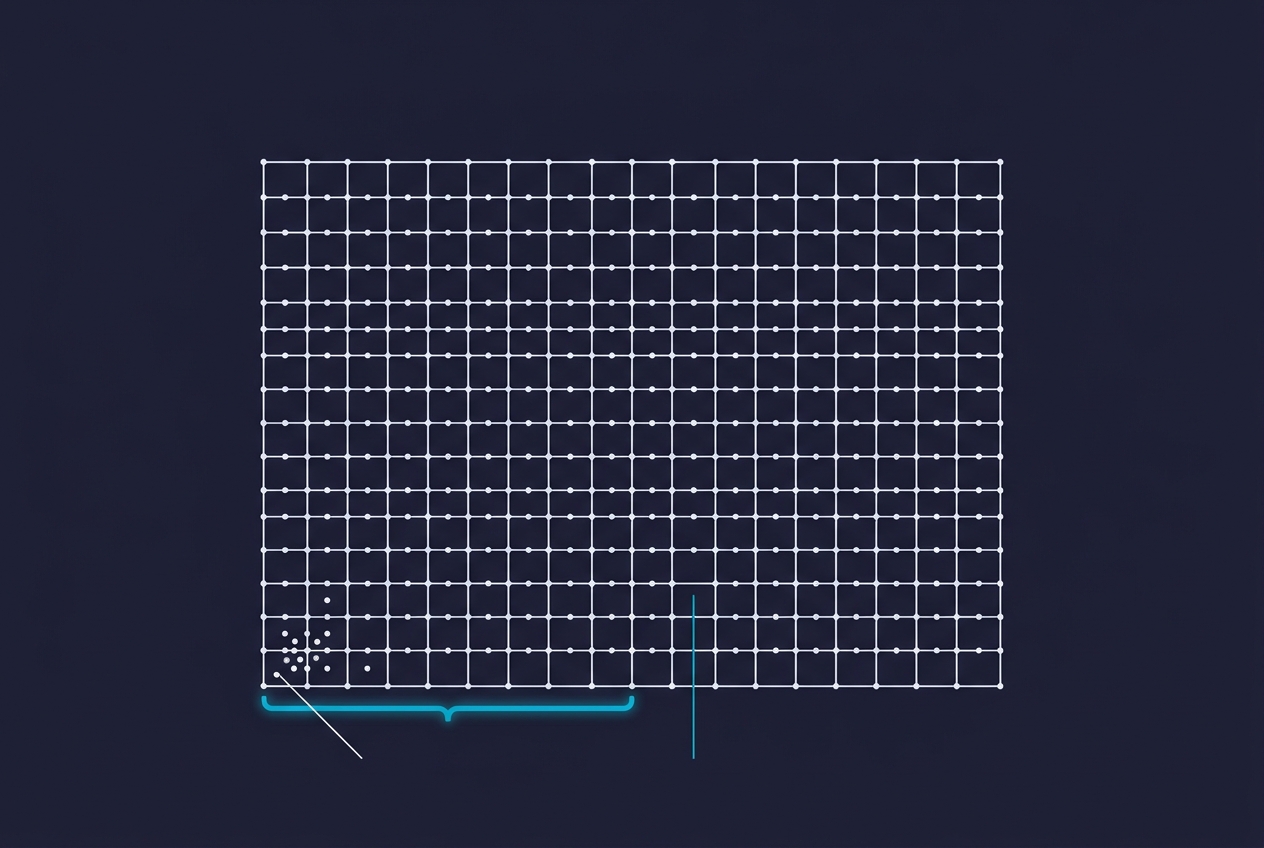
Traditional quality assurance (QA) programs in contact centers rely on a sampling methodology that is increasingly insufficient for the demands of the modern customer-experience economy. By reviewing only a small fraction of total call volume—typically between 1% and 2%—organizations are making strategic decisions based on a dataset that lacks the statistical power to identify rare but high-impact events, systemic compliance failures, or subtle shifts in customer sentiment. Transitioning to full-coverage conversation analysis allows firms to move from anecdotal evidence to a complete dataset where every interaction informs the strategy.
Key takeaways
- Statistical Insignificance: A 1-2% sample size is mathematically incapable of identifying low-frequency, high-severity risks such as specific compliance violations or emerging product defects.
- Selection Bias: Manual selection often favors outliers (very long or very short calls), which skews the understanding of the "average" customer experience.
- The Compliance Gap: Full-coverage analysis acts as an automated safety net, flagging 100% of interactions for regulatory adherence rather than relying on the luck of the draw.
- Operational Efficiency: Shifting to automated, total-population analysis allows QA teams to focus on coaching and root-cause analysis rather than manual data entry.
The mathematical failure of the small sample
In most enterprise contact centers, the volume of interactions is so high that human QA teams can only listen to a handful of calls per agent per month. From a statistical standpoint, this creates a massive margin of error. If a specific issue—such as a failure to disclose a mandatory legal disclaimer—occurs in 0.5% of calls, the probability of a 2% random sample catching that specific error is remarkably low.
This is a classic problem of "searching for a needle in a haystack" where the haystack is growing exponentially. When organizations rely on these small slices of data, they often suffer from Type II errors: failing to detect a problem that actually exists. This leads to a false sense of security regarding compliance and brand reputation. To gain a deeper understanding of how to manage this volume without ballooning costs, leaders are looking at how to audit every customer interaction without increasing QA headcount.
Why "random" sampling is rarely random
Even when QA managers attempt to pick calls randomly, human bias often creeps into the process. There is a natural tendency to select calls that are unusually long (assuming they contain complex issues) or unusually short (assuming they were disconnected or handled poorly). While these outliers are important, they do not represent the bulk of the customer journey.
Furthermore, the "Observer Effect" suggests that agents may perform differently when they know they are being sampled, but with 98% of their work going unmonitored, the data collected during those few sampled interactions is a poor predictor of daily performance. Forrester's Customer Experience practice, which tracks how customers rate their experiences across brands through its CX Index, emphasizes that consistency is the primary driver of loyalty. Consistency cannot be measured, let alone managed, if the vast majority of the work is invisible to leadership.
Moving from sampling to total population analysis
The shift toward full-coverage analysis is driven by the maturation of conversation intelligence. Organizations are no longer limited by the number of hours a human can listen to audio. By using a conversation-intelligence layer like Hear.ai to transcribe and analyze 100% of interactions, companies can identify patterns that were previously invisible.
For example, instead of a QA manager noticing one instance of a customer mentioning a competitor, an automated system can report that competitor mentions increased by a certain share across 50,000 calls in a single week. This provides a level of market intelligence that sampling could never achieve. This data-driven approach is essential for building the path to a CX metrics stack that executives actually trust, as it replaces "I think" with "the data shows."
The role of infrastructure in full-coverage QA
Transitioning to 100% coverage requires a robust technical foundation. Modern Cloud Contact Center as a Service (CCaaS) platforms, such as Genesys, Five9, or Salesforce Service Cloud, provide the raw data stream (voice and chat logs) necessary for analysis.
However, the CCaaS platform is only the delivery mechanism. The intelligence layer must be able to categorize intent, sentiment, and compliance markers at scale. According to the Gartner Hype Cycle for Customer Service & Support, domain-specific AI and data protection are critical focus areas for 2026. This suggests that the future of QA isn't just about more data, but about more precise, context-aware analysis that understands the nuances of a specific industry’s language and regulatory requirements.
Beyond QA: The strategic impact of full coverage
When every conversation is analyzed, the QA department evolves from a policing function into a strategic insights hub.
- Product Feedback: Marketing and product teams can see exactly why customers are calling, categorized by feature or campaign, across the entire customer base.
- Agent Coaching: Instead of coaching an agent on a single bad call from three weeks ago, supervisors can look at an agent's performance trends across hundreds of calls, identifying specific behavioral patterns that need correction.
- Compliance and Risk: Legal teams can receive automated alerts the moment a high-risk phrase is detected, allowing for immediate intervention rather than waiting for a quarterly audit.
Research from Metrigy indicates that companies integrating AI-driven conversation analysis into their CX stack see a measurable correlation with improved success metrics. By capturing the "voice of the customer" in its entirety, firms can move toward the "Total Experience" model that analysts at firms like IDC advocate for—a model where customer, employee, and user experiences are treated as a single, interconnected ecosystem.
FAQ
Does 100% coverage mean we no longer need human QA auditors? No. Human auditors shift their focus from finding problems to solving them. The AI identifies the trends and flags specific calls, but humans are still required to provide the nuanced coaching and strategic decision-making that machines cannot replicate.
How does full-coverage analysis handle privacy and data protection? Leading platforms use PII (Personally Identifiable Information) redaction to mask sensitive data like credit card numbers or social security numbers before the text is analyzed. This ensures compliance with GDPR, CCPA, and other regional data protection laws.
Is it expensive to analyze every single call? While there is a technology cost, it is often offset by the reduction in manual labor and the mitigation of risk. The cost of a single major compliance fine or a missed systemic product defect often far outweighs the annual subscription for a conversation intelligence platform.
Can this technology work with legacy on-premise phone systems? Yes, though it is more complex. Most modern analysis tools prefer the APIs provided by cloud platforms like Microsoft or AWS, but connectors exist to pull audio from legacy recording systems for retrospective analysis.
In the data-driven CX economy, a 2% sample is no longer a benchmark; it is a liability. By moving to full-coverage conversation analysis, organizations ensure that their strategy is built on the reality of their entire customer base, not just a convenient slice of it.
Explore our latest research on how to audit every customer interaction without increasing QA headcount to begin your transition.