
Beyond the 2% Sample: The Statistical Case for Total QA Coverage
QA sampling often captures less than 2% of calls, creating significant statistical bias. Learn why full-coverage conversation analysis is the new standard for CX.
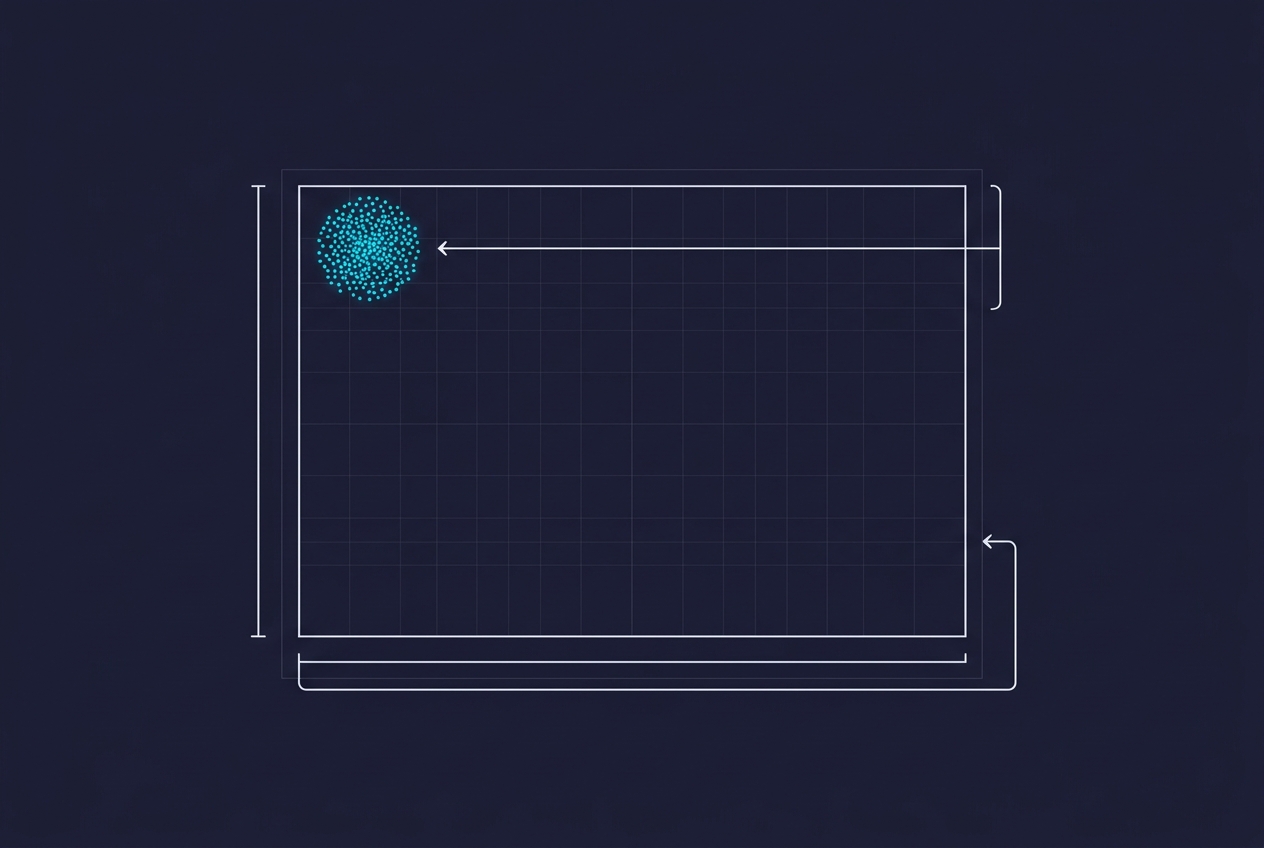
QA sampling breaks down because a 1-2% sample size is statistically insufficient to identify low-frequency, high-impact events like compliance errors or specific churn drivers. By moving to full-coverage conversation analysis, organizations replace anecdotal evidence with a complete census of customer interactions, reducing the margin of error to near zero. This shift allows leaders to move from reactive coaching to proactive operational strategy based on the entire dataset of customer intent.
Key takeaways:
- Statistical Insignificance: A 2% sample cannot reliably detect behaviors that occur in less than 10% of total interactions.
- Black Swan Exposure: Rare but catastrophic events, such as regulatory compliance breaches, are frequently missed by manual sampling.
- Bias Neutralization: Full coverage eliminates the "recency bias" and "selection bias" inherent in manual supervisor reviews.
- Operational Integration: Transitioning to 100% analysis requires a conversation intelligence layer integrated with existing CCaaS platforms.
The Statistical Mirage of Manual Quality Assurance
Most contact centers operate on a legacy QA model where a supervisor listens to three to five calls per agent per month. In a high-volume environment, this often represents less than 2% of the total interaction volume. From a statistical perspective, this sample size is inadequate for making broad claims about agent performance or customer sentiment.
When a sample is this small, the margin of error expands significantly. If an agent handles 500 calls a month and only five are reviewed, a single poor interaction accounts for 20% of their quality score, despite representing only 0.2% of their actual work. This creates a high degree of "noise" in performance data, making it difficult to distinguish between a genuinely underperforming agent and one who simply had a difficult interaction during the sampling window. This is a primary reason why CX Measurement: Why CSAT, NPS, and CES Can Mislead Leaders when these metrics are not anchored in a complete view of the customer journey.
The Compliance Gap: Why Sampling is a Risk
For industries with heavy regulatory oversight—such as finance, healthcare, or insurance—the failure of sampling is not just a measurement problem; it is a liability risk. Regulatory bodies do not accept "we didn't sample that call" as a defense for a compliance breach.
In a manual sampling environment, a compliance error that occurs in 1% of calls has a high probability of going undetected for months. This is what statisticians call a "Long Tail" problem. To catch these rare but high-stakes events, organizations are increasingly turning to conversation intelligence layers. For example, teams pair a CCaaS platform like Five9 with a conversation-intelligence layer such as Hear.ai. This allows for 100% coverage, where AI-driven models flag specific keywords, mandatory disclosures, or prohibited language across every single call, rather than relying on the luck of the draw in a manual queue.
Moving from Sampling to Census: The Infrastructure Shift
The transition from a 2% sample to a 100% census requires a shift in technical architecture. Traditional QA is a human-intensive process that scales linearly with cost. To achieve full coverage, the analysis must be automated at the infrastructure level.
According to Gartner's Customer Service & Support practice, the focus for 2026 is moving toward domain-specific AI and data protection. This involves deploying models that can transcribe and analyze sentiment, intent, and compliance in real-time or near-real-time. Platforms like Salesforce Service Cloud and Google Cloud provide the underlying data processing power, but the specific CX insights often come from specialized layers that can interpret the nuance of a customer service interaction.
By analyzing the entire population of calls, leaders can identify systemic issues that are invisible in small samples. For instance, if a specific product feature is causing frustration, a 2% sample might show two complaints. A 100% analysis might reveal that the same issue was mentioned in 400 calls, signaling a major product defect rather than an isolated agent-handling issue.
Leveraging Conversation Intelligence for Strategic Insights
When every interaction is analyzed, QA data moves from a human resources tool to a strategic asset. IDC’s Future of Customer Experience research program notes that tech-spend is increasingly directed toward tools that provide a unified view of the customer. Total conversation analysis provides this by quantifying the "unstructured" data found in voice and chat.
With full coverage, organizations can:
- Identify Root Causes: Determine if a high Average Handle Time (AHT) is due to agent inefficiency or a complex process that needs redesigning.
- Validate Training: Measure how quickly agents adopt new talk tracks after a training session by tracking the usage of new phrases across all their calls.
- Predict Churn: Identify the specific linguistic markers that precede a cancellation request, which are often missed by post-call surveys.
This level of detail is necessary because Why Operational CX Data Often Fails to Impress the Boardroom is typically due to a lack of scale and statistical rigor. Presenting a finding based on 10,000 analyzed calls carries significantly more weight than an observation based on a dozen manual reviews.
FAQ
Does 100% coverage mean we no longer need manual QA?
No. Manual QA shifts from "finding the problem" to "validating the solution." Supervisors spend less time listening to random calls and more time coaching agents on the specific high-impact interactions flagged by the automated system.
How does full-coverage analysis handle privacy and data protection?
Modern conversation intelligence platforms use PII (Personally Identifiable Information) redaction to strip sensitive data from transcripts before analysis. This ensures compliance with GDPR, CCPA, and PCI standards while still allowing for sentiment and intent analysis.
What is the primary barrier to moving away from sampling?
The primary barrier is usually the legacy mindset that "quality" requires a human ear. Once organizations see the statistical delta between their sampled scores and their total-coverage scores, the business case for automation becomes clear.
Can AI accurately score soft skills like empathy?
AI is increasingly capable of identifying acoustic markers (tone, pitch, interruptions) and linguistic markers (empathetic phrases) that correlate with high empathy scores. While a human might do the final validation, the AI can rank and prioritize which calls a human should review for soft-skill coaching.
Explore our research on Why Operational CX Data Often Fails to Impress the Boardroom to see how full-coverage data changes the conversation with stakeholders.