
Why your first-contact resolution rate is likely lying to you
First-contact resolution (FCR) is often inflated by narrow windows and siloed data. Learn how to identify and fix the measurement traps that mask CX friction.
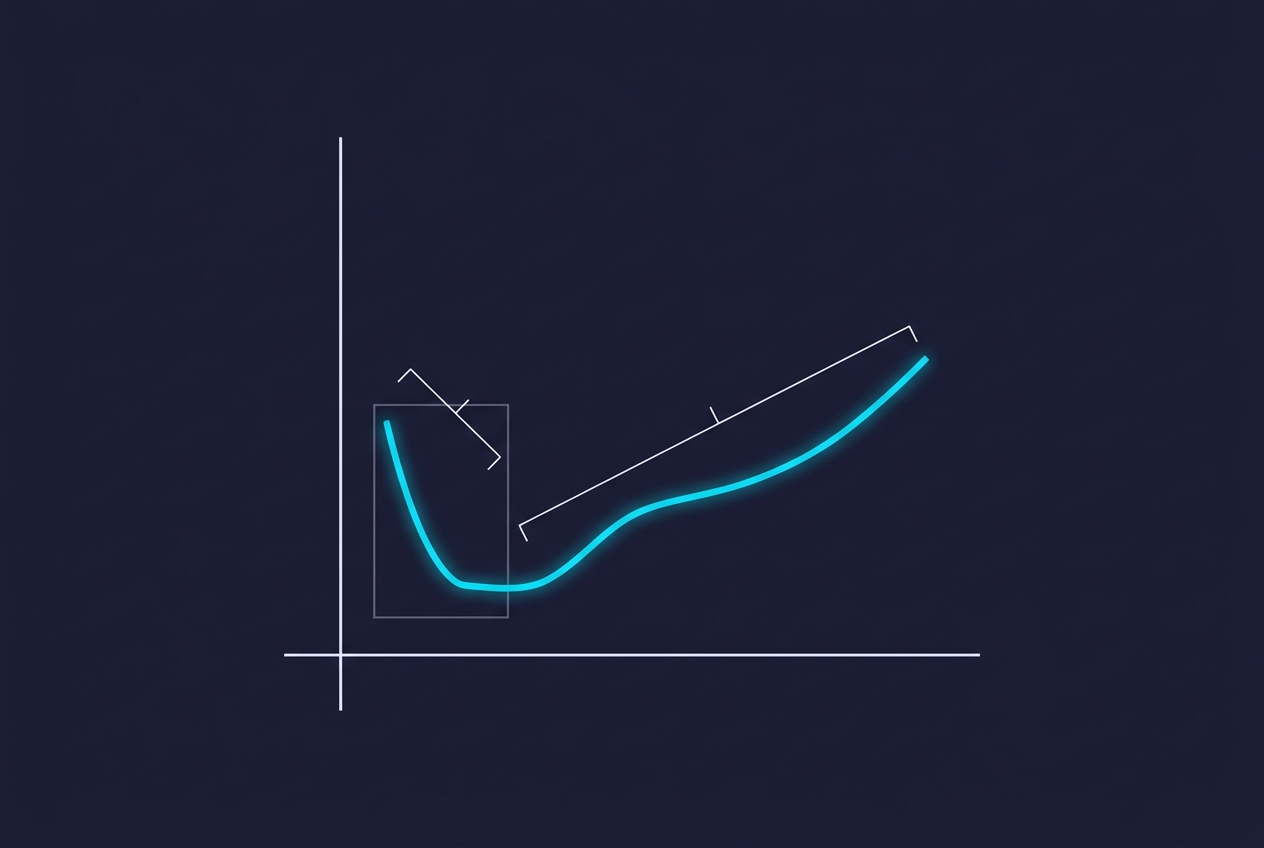
First-contact resolution (FCR) is often cited as the most critical metric in the contact center because of its direct correlation with both cost efficiency and customer satisfaction. However, in many organizations, FCR is an over-reported figure that masks underlying friction rather than highlighting success. When measured in isolation within a single channel or across too short a time window, FCR becomes a vanity metric that obscures the reality of the customer journey.
To move toward an accurate understanding of resolution, leaders must shift from session-based reporting to journey-based analysis. This requires identifying the structural and technical traps that allow unresolved issues to be categorized as 'resolved.'
Key takeaways:
- FCR is a journey metric, not a transaction metric: True resolution must be tracked across channels and over a multi-day window to be valid.
- Siloed data creates 'phantom' resolutions: Customers who fail to find an answer in chat and then call the phone line are often counted as two separate 'resolved' first contacts.
- Narrow tracking windows (24–48 hours) are insufficient: Complex issues often resurface 3 to 7 days later, yet most CCaaS platforms default to much shorter look-back periods.
- AI and conversation intelligence provide the 'why': Automated analysis of 100% of interactions is necessary to detect when a customer says they are 'calling back' about a previous issue.
The definition trap: Who decides what is resolved?
The most common reason for inflated FCR is a reliance on agent-dispositioned data. When an agent marks a ticket as 'closed' in a platform like Salesforce Service Cloud or Zendesk, the system often records that as a resolution. However, agent intent does not always equal customer resolution. Agents may close a ticket because they provided the 'correct' answer according to the knowledge base, even if that answer did not actually solve the customer’s problem.
Furthermore, many organizations exclude certain types of calls from their FCR denominator, such as 'wrong numbers' or 'transfers.' If a customer is transferred three times before reaching the right department, the final agent might record an FCR 'win' for that specific session, while the customer’s actual experience was one of significant effort. This lack of data integrity is a core component of what we call the Instrumentation Before Insight: Fixing the CX Data Gap.
The channel silo problem
Modern CX occurs across a fragmented landscape. A customer might start with a search on a company's help site, move to a chatbot, and finally call the contact center. If these systems are not unified, the contact center sees the phone call as a 'first contact.'
Research from Gartner suggests that 2026 will see a heightened focus on domain-specific AI to bridge these data gaps. Without a unified view, the 'resolution' the phone agent achieves is actually a second or third attempt by the customer. Platforms like Five9 and Genesys offer cross-channel tracking, but the logic must be configured to recognize a customer's identity (email, phone, or account ID) across every touchpoint to prevent 'phantom' FCR wins.
The re-contact window: Why 24 hours isn't enough
Most legacy reporting tools use a 24-hour or 48-hour window to check for re-contacts. If the customer doesn't call back within that timeframe, the initial contact is marked as resolved. This is a measurement trap because it ignores the 'dormancy' of certain issues. For example, in insurance or banking, a customer may need several days to verify if a change has been reflected in their account. If they call back on day four, the initial call is still falsely credited as a first-contact resolution.
Metrigy, which tracks CX and AI success metrics, often highlights that top-performing organizations use a 7-to-30-day window for FCR measurement, depending on the complexity of the product. Extending the window provides a more sobering, but more accurate, view of how often agents are actually solving problems on the first try.
How manual QA misses the FCR reality
Traditional quality assurance (QA) models, which often sample only 1-2% of calls, are ill-equipped to identify FCR failures. A QA analyst listening to a random call may hear an agent provide a technically accurate answer and score it highly. However, that analyst has no visibility into whether that same customer called back two hours later because the solution didn't work.
This is why many leaders are making The Case for Retiring the 2-Percent QA Sampling Model. By moving to automated conversation intelligence, such as Hear.ai, organizations can analyze 100% of interactions. These tools use natural language processing to detect phrases like 'I’m calling back about...' or 'I've already tried what the last person told me.' This provides a factual FCR rate based on actual customer speech, rather than inferred data from a CRM timestamp.
Building a more honest FCR metric
To fix FCR measurement, organizations should adopt a multi-layered approach that prioritizes customer effort over internal efficiency.
- Implement Intent Matching: Use AI layers from providers like Google Cloud or Microsoft to categorize the specific reason for a contact. If a customer contacts the brand twice for the same 'intent' within 14 days, the first contact is automatically disqualified from FCR, regardless of the channel used.
- Incorporate 'No-Call' Deflection: True FCR should include self-service. If a customer visits a help article and then calls within 30 minutes, the help article failed. The 'first contact' was the digital interaction, and it was not resolved.
- Audit 'Resolved' Dispositions: Regularly use conversation intelligence to audit calls that agents marked as 'resolved.' Look for signs of customer hesitation or unresolved 'follow-up' questions that suggest the issue will likely recur.
FAQ
What is a 'good' first-contact resolution rate? Industry averages vary widely, but most benchmarks suggest 70–75% as a standard. However, a high FCR is meaningless if it is calculated using a narrow 24-hour window that ignores cross-channel re-contacts.
How does AI improve FCR measurement accuracy? AI can link disparate interactions across chat, email, and voice by identifying the customer's intent and identity. This allows the system to recognize that a 'new' phone call is actually a continuation of an unresolved chat session from earlier in the day.
Should agents be incentivized on FCR? Incentivizing FCR can lead to 'gaming,' where agents discourage customers from calling back or close tickets prematurely. It is more effective to use FCR as a diagnostic tool for process improvement rather than a primary KPI for individual agent performance.
What is the difference between FCR and FCR-30? FCR typically refers to a standard resolution within a short window, while FCR-30 refers to a 30-day window. Using a 30-day window is more accurate for complex industries like healthcare or utilities where issues take longer to validate.
By acknowledging the traps of legacy FCR measurement, CX leaders can stop chasing inflated numbers and start addressing the root causes of customer effort. For more on how to align your metrics with actual business outcomes, explore our guide on Choosing the Right CX Metric: Why CSAT, NPS, and CES Can Mislead.