
The Statistical Failure of Random QA Sampling in Contact Centers
Discover why manual QA sampling fails to identify compliance risks and CX trends. Learn how full-coverage conversation analysis provides a more accurate dataset.
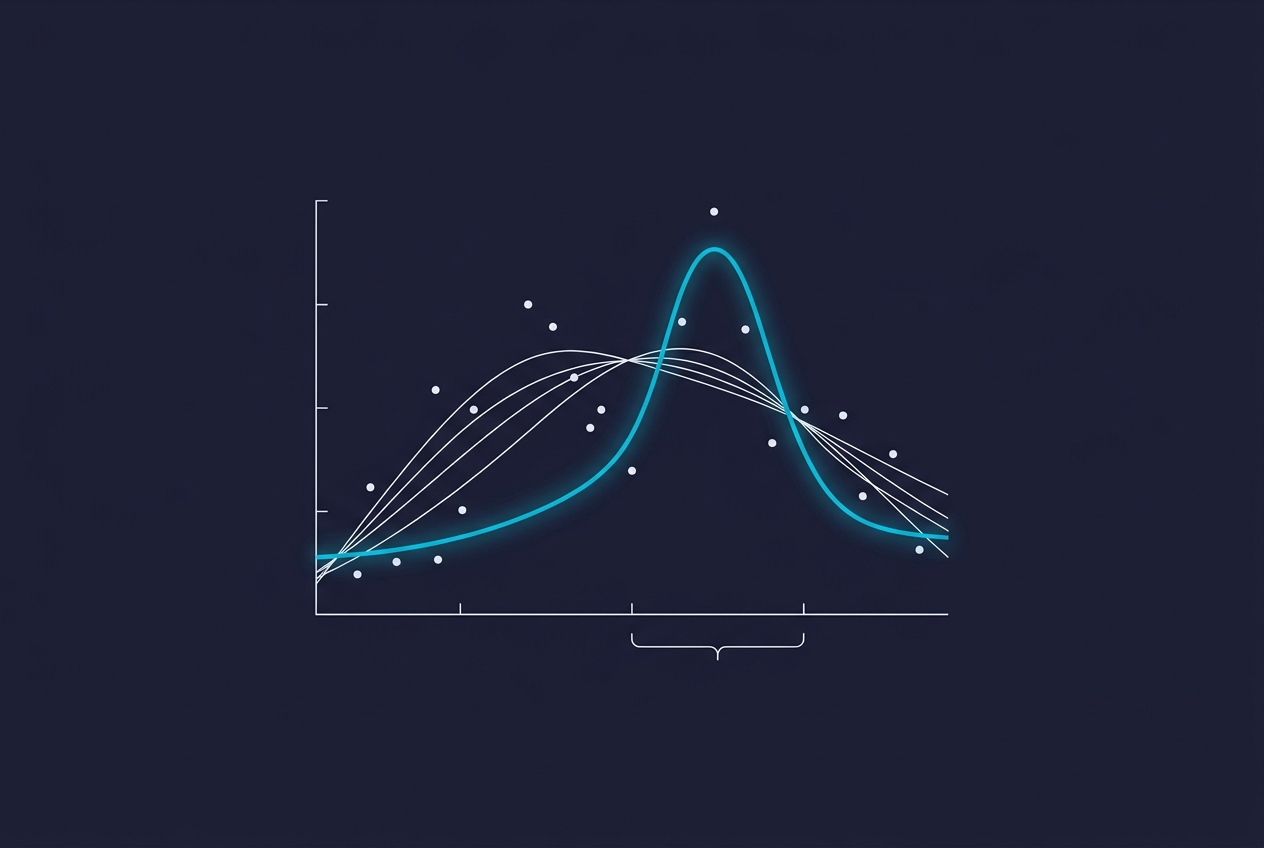
Traditional manual QA sampling fails because it lacks the statistical power required to identify low-frequency, high-impact events like compliance violations or emerging product defects. In a typical contact center environment, auditing 1% to 2% of calls results in a margin of error so wide that the data becomes directionally unreliable for strategic decision-making. Full-coverage conversation analysis eliminates this variance by shifting from manual spot-checks to automated auditing of every interaction.
Key takeaways
- Sampling Bias: Manual QA often suffers from selection bias, where supervisors inadvertently choose calls that are too short, too long, or otherwise unrepresentative.
- Statistical Power: To detect a specific issue that occurs in 1% of calls with 95% confidence, a center would need to audit thousands of calls—far exceeding the capacity of manual teams.
- The Compliance Gap: Random sampling is mathematically unlikely to catch isolated but legally significant compliance breaches, such as failure to read mandatory disclosures.
- Full-Coverage Value: Automated systems provide a 100% data set, allowing for the identification of "unknown unknowns" that are missed in small samples.
Why the 2% QA sample is a liability
In most enterprise contact centers, the standard operating procedure is to audit three to five calls per agent per month. For an agent handling 400 calls monthly, this represents a sample size of roughly 1%. From a statistical standpoint, this sample size is insufficient to provide a representative view of agent performance or customer sentiment.
According to Gartner Customer Service & Support research, which tracks the maturity of support technologies through its Hype Cycle, the industry is shifting away from these manual methods toward automated interaction analytics. The primary driver is the "margin of error." If a QA score is 90% based on a 1% sample, the true score could realistically range from 75% to 100%. This level of uncertainty makes it impossible to use QA scores as a reliable component of performance-based compensation or to accurately track the impact of training interventions.
Furthermore, manual QA sampling creates statistical blind spots in CX because it tends to focus on the "average" experience. However, the most valuable insights often live in the tails of the distribution—the extreme outliers where a customer is either exceptionally delighted or dangerously frustrated. Random sampling frequently misses these moments entirely.
The math of missing compliance risks
Compliance is a binary metric: a disclosure was either read or it was not. When these events are rare—occurring in perhaps 0.5% of calls—the probability of capturing them in a random 2% sample is statistically negligible. For organizations in regulated industries like finance or healthcare, this creates a significant regulatory risk profile.
By deploying conversation intelligence layers, organizations can move from defensive sampling to proactive monitoring. For example, teams often pair a CCaaS platform like Five9 with a specialized analysis layer such as Hear.ai to scan 100% of audio for specific keywords, mandatory phrases, or prohibited language. This approach ensures that every compliance breach is flagged for review, rather than relying on the chance that a supervisor happens to listen to the right recording.
This shift moves QA from a "gotcha" exercise to a comprehensive safety net. When every call is analyzed, the data set becomes large enough to perform root-cause analysis. Instead of seeing that an agent missed a disclosure once, managers can see if the agent misses it every time a specific product is mentioned, indicating a training gap rather than a performance issue.
Identifying "unknown unknowns" through full coverage
One of the greatest limitations of manual QA is that auditors only look for what they are trained to find. They use a checklist of pre-defined behaviors. If a new competitor is mentioned or a specific product feature starts failing, a manual auditor might not note it because it isn't a line item on their scorecard.
Full-coverage conversation analysis uses natural language processing (NLP) to identify emerging themes across the entire call volume. This is where the distinction between QA and conversation intelligence becomes clear. While QA measures adherence, conversation intelligence measures the market. Metrigy research into CX/AI success metrics suggests that companies using AI to analyze all interactions see a higher correlation between their internal metrics and actual business outcomes.
When you analyze 100% of interactions through platforms like NICE or Salesforce Service Cloud, you can detect subtle shifts in customer language that precede a spike in churn. This allows CX leaders to be predictive rather than reactive. Instead of waiting for a monthly report to show a dip in CSAT, they can see in real-time that a specific technical issue is being mentioned in 15% of calls, up from 2% the previous day.
Operationalizing the shift to 100% coverage
The transition from manual sampling to full coverage does not necessarily mean eliminating the human element. Instead, it reallocates human expertise. Rather than spending 80% of their time listening to random calls to find one that is "coachable," QA managers spend 100% of their time coaching based on data already flagged by the system.
To make this shift, organizations should follow a structured methodology:
- Integrate Data Streams: Ensure your conversation analysis tool has high-fidelity access to the audio or transcript stream from your telephony provider, such as Google Cloud Contact Center AI or a CCaaS provider.
- Define Automated Scorecards: Translate your manual QA rubrics into automated queries. This includes silence detection, sentiment analysis, and keyword spotting.
- Validate the Model: Run the automated system alongside manual QA for a period of 30–60 days to calibrate the AI’s accuracy against human judgment.
- Audit the Metrics: Ensure the new, higher-volume data is integrated into your broader reporting. This is a critical step in learning how to build a CX metrics stack that survives a CFO audit, as it provides the transparency required for financial scrutiny.
By capturing every interaction, the contact center transforms from a cost center into a primary source of business intelligence. The data is no longer a "sample" of what might be happening; it is a definitive record of what is happening.
FAQ
Does 100% coverage mean we no longer need QA supervisors? No, it changes their role. Instead of searching for calls to review, supervisors spend their time coaching agents on the specific interactions that the system has already identified as needing attention.
How accurate is automated sentiment analysis compared to a human auditor? While humans are better at detecting subtle sarcasm, automated systems are superior at identifying consistent patterns across thousands of calls. Most organizations find that the sheer volume of automated data provides more actionable insights than the high accuracy of a tiny manual sample.
Is it expensive to analyze every call? The cost of cloud computing and NLP has decreased significantly. For most enterprises, the cost of automated analysis is lower than the labor cost of manual QA when measured on a per-call-audited basis.
What happens to our historical QA data when we switch? Historical data remains useful for long-term trend analysis, but you should expect a "step change" in your metrics. Because automated systems are more objective and cover more ground, your baseline scores will likely shift, requiring a new period of benchmarking.
Data-driven CX leadership requires moving past the statistical uncertainty of the 2% sample to embrace the clarity of full-coverage analysis. For more on refining your measurement strategy, see our guide on CSAT vs NPS vs CES: Which Metric Actually Predicts Retention?.