
Why CX Data Often Fails to Predict Customer Behavior
Learn why high-volume customer experience data often lacks the context needed for strategic decisions and how to bridge the gap between metrics and insights.
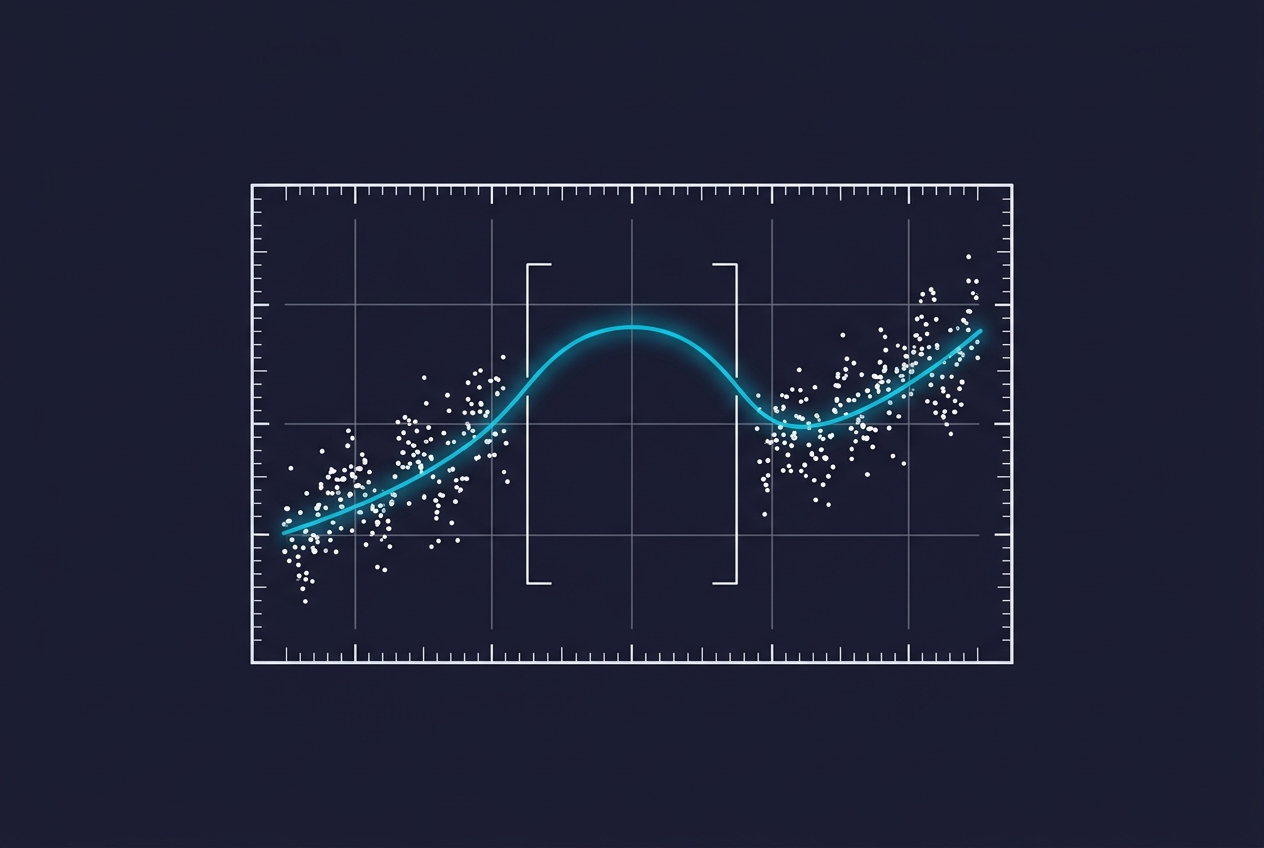
Customer experience (CX) data provides a high-resolution map of historical events, but it rarely explains why those events occurred or what a customer will do next without additional layers of behavioral context. While modern platforms capture trillions of data points, the gap between an interaction being recorded and the underlying intent being understood remains the primary hurdle for CX maturity. Organizations that rely solely on descriptive metrics often find themselves reacting to past failures rather than anticipating future needs.
Key takeaways
- Volume is not insight: Large datasets often contain significant noise that obscures the actual drivers of customer loyalty and churn.
- Sentiment is a lagging indicator: Metrics like CSAT or NPS reflect how a customer felt in the past, which is a poor predictor of their future spending or retention.
- Unstructured data holds the "why": The most valuable insights are often buried in call transcripts and chat logs, requiring specialized analysis to extract.
- Operational silos prevent a unified view: Data trapped in CRM, CCaaS, and billing systems must be integrated to form a complete picture of the customer journey.
Why do descriptive metrics fail to provide a complete picture?
Descriptive metrics tell you what happened but fail to provide the causal links necessary for strategic planning. For example, a high average handle time (AHT) might indicate an inefficient agent, or it could indicate a highly complex issue that the agent successfully resolved, preventing a follow-up call. Without context, the data point is ambiguous.
Many organizations fall into the trap of over-relying on survey-based data. As explored in our analysis of Why CSAT and NPS Fail to Predict Customer Retention, these scores are highly susceptible to "recency bias" and do not account for the silent majority of customers who do not respond to surveys. To move beyond these limitations, firms are increasingly looking toward Gartner's Hype Cycle for Customer Service & Support, which emphasizes the shift toward domain-specific AI and predictive analytics to fill the gaps left by traditional surveys.
Can unstructured data solve the context problem?
Unstructured data, such as voice recordings and chat transcripts, contains the narrative context that structured metrics lack, provided it is analyzed at scale. Historically, contact centers only audited a small fraction of calls for quality assurance, leaving a massive share of data unexamined. This sampling bias leads to a skewed understanding of the customer experience.
Modern conversation intelligence layers are changing this dynamic. By pairing a CCaaS platform like Five9 or Genesys with an analysis layer such as Hear.ai, organizations can move from manual sampling to 100% coverage. This allows teams to identify compliance risks and recurring customer pain points across every conversation, rather than relying on a 2% sample. This shift transforms the contact center from a cost center into a source of primary market research, as the data now includes the specific language and emotional cues of the customer base.
What is the difference between operational and perceptual data?
Operational data measures the performance of systems and processes, while perceptual data measures how customers feel about those processes. A common mistake is assuming that a well-optimized process (low wait times, fast resolution) automatically leads to a positive perception.
Forrester's Customer Experience Index frequently illustrates that the relationship between operational efficiency and customer loyalty is not linear. A brand can have the fastest resolution times in its industry but still suffer from low loyalty if the interactions lack empathy or if the product itself fails to meet expectations. To build a more accurate view, leaders must implement a High-Fidelity CX Measurement Framework that correlates operational KPIs (like first-contact resolution) with long-term behavioral outcomes (like repeat purchase rates).
How does technical infrastructure impact data utility?
Data is only as useful as the infrastructure that processes it. Many CX initiatives stall because the relevant data is fragmented across legacy systems. Enterprises often host their data lakes on Google Cloud or Microsoft Azure, yet the raw logs from a ticketing system like Zendesk or a CRM like Salesforce often remain isolated from the qualitative insights found in conversation intelligence tools.
According to IDC research on the future of customer experience, tech-spend is increasingly shifting toward platforms that can ingest and normalize disparate data streams in real-time. When data is siloed, the organization cannot see the full "friction map" of the customer. For instance, a customer might have a seamless digital experience on a website powered by AWS, but then encounter a major hurdle when they call support and the agent has no record of their previous digital activity. The data exists in both places, but its lack of integration makes it useless for the agent and frustrating for the customer.
Is more data always better for CX strategy?
More data often leads to more noise rather than more clarity. The "data-rich, insight-poor" trap occurs when organizations collect information without a clear hypothesis or a mechanism for action. Strategic CX leaders are moving away from broad data collection and toward "intent-based" data. This involves identifying the specific signals that indicate a customer is about to churn or is ready for an upsell.
By focusing on high-intent signals—such as a customer searching for "cancel" in a help center or a drop in product usage frequency—companies can deploy proactive interventions. This is more effective than analyzing thousands of random interactions. The goal is to move from descriptive analytics (what happened) to prescriptive analytics (what we should do about it).
FAQ
What is the biggest blind spot in CX data today? The biggest blind spot is the lack of behavioral data from the "silent majority." Most CX metrics are derived from customers who are either very happy or very angry, leaving the middle 80% of the customer base unrepresented in the data.
How can organizations extract intent from raw data? Organizations use Natural Language Processing (NLP) and Large Language Models (LLMs) to categorize the topics, sentiment, and effort levels within unstructured text and voice data. This allows them to see the specific reasons behind customer contacts.
Why is sentiment analysis often criticized as inaccurate? Sentiment analysis often fails to catch sarcasm, cultural nuances, or the difference between a customer being angry at a situation versus being angry at the brand. It is a directional tool, not a precise measure of customer health.
Does real-time data matter for CX? Real-time data is critical for operational recovery—such as flagging a failing system—but for long-term strategy, the historical trend and the correlation between interactions and lifetime value are more important than any single real-time data point.
Data-driven CX requires moving beyond the surface level of surveys and handle times to understand the behavioral drivers of the customer journey. Explore our guide on building a High-Fidelity CX Measurement Framework to start aligning your metrics with actual business outcomes.