
Why first-contact resolution data is often structurally flawed
First-contact resolution often fails due to narrow look-back windows and channel silos. Learn how to audit your FCR methodology for more accurate CX insights.
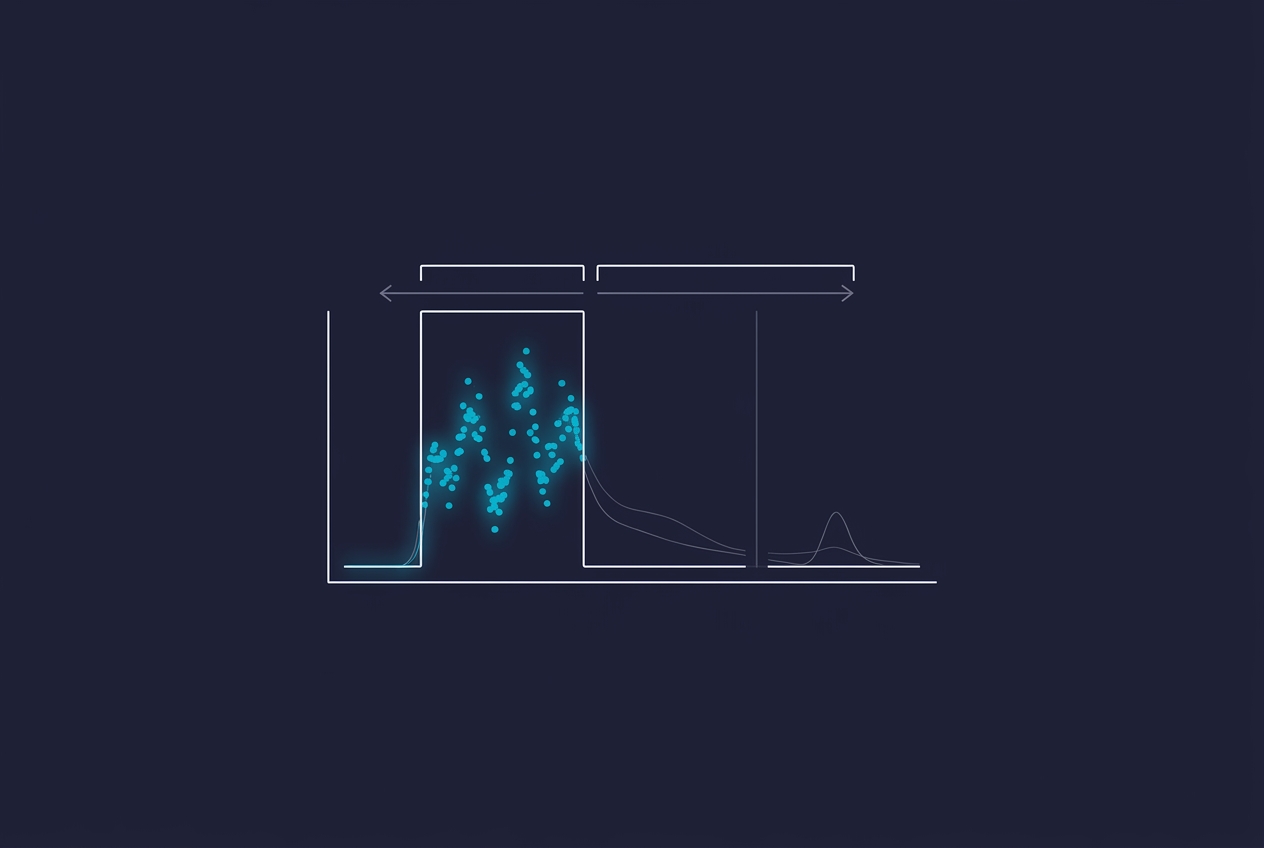
First-contact resolution (FCR) measures the percentage of customer inquiries resolved during the initial interaction, theoretically eliminating the need for subsequent follow-ups. In practice, however, FCR is frequently inflated by structural measurement traps, such as narrow look-back windows and the failure to track customers across disconnected communication channels. To achieve an accurate view of operational efficiency, organizations must move beyond agent-reported status and adopt data-driven validation.
Key takeaways
- The look-back window determines accuracy: Short windows (e.g., 24 hours) often fail to capture delayed repeat contacts, leading to artificially high FCR scores.
- Channel silos mask friction: Customers who fail to find an answer on a web portal and then call a contact center are often recorded as a "first-contact" success by the voice team.
- Validation requires the "why": Relying on agent-closed tickets creates a bias; true resolution must be verified through customer behavior or automated conversation analysis.
- FCR is a proxy, not an endpoint: High FCR does not always correlate with high customer satisfaction if the effort required to reach that resolution was excessive.
Why the look-back window is your biggest measurement risk
The most common way to calculate FCR is to monitor whether a customer contacts the organization again within a specific timeframe. If they do not, the first interaction is marked as "resolved." The flaw in this logic lies in the duration of the window. Many contact centers utilize a 24-hour or 48-hour window to keep their reporting agile.
However, complex issues—such as billing disputes or technical troubleshooting—often have a longer incubation period. A customer might wait three days for a promised email that never arrives before calling back. In a 24-hour measurement model, that original failed interaction is recorded as a success. According to Metrigy, which tracks CX and AI success metrics, the methodology used to define these windows can significantly alter the perceived performance of a support organization. Extending the window to 7 or 14 days often reveals a large share of "phantom resolutions" that were actually unresolved issues.
The danger of agent-defined resolution
In many legacy environments, FCR is determined by the agent selecting a "resolved" checkbox in a CRM like Salesforce Service Cloud or a CCaaS platform like Genesys. This creates an inherent conflict of interest. Agents are often incentivized on handle time and resolution rates, which may lead them to close tickets prematurely.
Without a secondary validation layer, the organization is measuring agent intent rather than customer reality. This is why Why CX leaders are ditching sampling for census-based analysis has become a priority for mature CX teams. Instead of trusting a manual toggle, analysts are looking at the entire lifecycle of the customer's journey to see if the issue actually stayed closed.
How channel silos hide repeat contacts
FCR is frequently measured in a vacuum. A customer may visit an FAQ page, engage with an AI chatbot on a website, and then eventually call a live agent. If the voice platform (such as Five9 or Talkdesk) does not have visibility into the previous digital attempts, the agent interaction is flagged as a "first-contact" resolution.
This "siloed success" ignores the cumulative effort the customer expended. Research from Gartner, particularly within their Hype Cycle for Customer Service & Support, emphasizes the move toward "journey orchestration" to solve this. If the measurement system cannot see that a customer bounced from a digital channel to a human one, the FCR metric is effectively lying about the efficiency of the service model. For a deeper look at this specific technical hurdle, see Does your FCR measurement account for cross-channel bounces?.
Using conversation intelligence to verify resolution
To fix FCR inflation, organizations are increasingly turning to automated analysis of the dialogue itself. Rather than waiting for a 7-day window to pass or relying on a post-call survey (which often suffers from low response rates), conversation-intelligence layers can identify the linguistic markers of a resolution.
For example, a platform like Hear.ai can analyze 100% of calls to detect phrases like "that didn't help" or "I've called about this before," which immediately invalidate an FCR claim regardless of what the agent's CRM status says. This level of analysis provides a "census-based" view of resolution, ensuring that the data surviving a CFO audit is based on the substance of the interaction rather than a timestamp.
The role of AI in FCR measurement
As AI agents take over more Tier-1 support tasks, the definition of FCR is shifting. If an AI agent on a platform like Zoom Contact Center or Intercom handles a query, is it a "contact"? Most analysts now argue that any interaction—human or machine—that requires the customer to initiate a request should be counted.
IDC notes in their Future of Customer Experience research that as AI handles more simple queries, the "human" FCR will naturally drop because agents are left with only the most complex, multi-touch problems. Failing to adjust FCR targets to account for this shift in case mix can lead to unfair performance evaluations for staff.
FAQ
What is a realistic look-back window for FCR?
While 24–48 hours is common, a 7-day window is generally considered the industry standard for capturing true resolution. For industries with complex cycles, such as insurance or healthcare, a 14-day window may be necessary to ensure the customer didn't simply give up or seek an alternative channel.
How does FCR differ from "First Response Time"?
First Response Time (FRT) measures how long a customer waits to hear back from a company. FCR measures whether the issue was actually fixed in that first interaction. A company can have a very fast response time but a very poor first-contact resolution rate.
Can you have 100% FCR?
In practice, no. Some issues are structurally complex and require research, callbacks, or third-party intervention. An FCR score that is too high (e.g., above 90% in a complex technical environment) is often a sign of measurement error or a look-back window that is too short.
How do I measure FCR across different channels?
To track FCR across channels, you must use a unified customer identifier (like an email address or account ID) across your CRM, CCaaS, and digital platforms. This allows you to see if a customer who used chat at 10:00 AM called the contact center at 2:00 PM, correctly identifying the second interaction as a repeat contact.
Accurate FCR measurement is the foundation of a lean service operation; without it, you are likely overestimating your efficiency while underestimating customer effort.
To learn more about building a data-driven CX strategy, explore our guide on How to build a CX metrics stack that survives a CFO audit.