
The mathematical failure of manual QA sampling in CX
Manual QA sampling lacks the statistical power to detect compliance risks or rare churn signals. Learn why full-coverage analysis is the new standard.
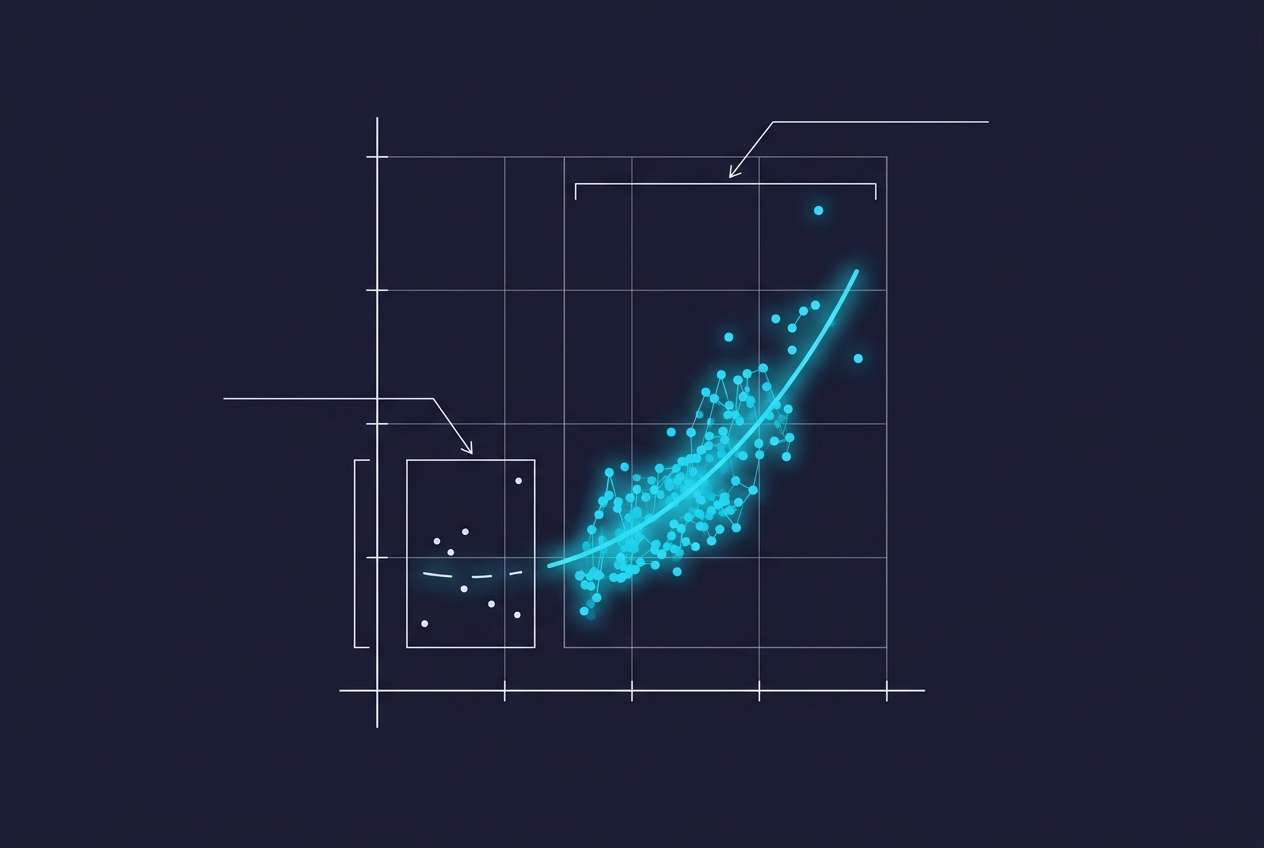
Traditional quality assurance (QA) programs rely on manual evaluators to review a small percentage of calls, typically between 1% and 2% of total volume. Mathematically, this sampling rate is insufficient to identify low-frequency, high-impact events such as compliance breaches or emerging customer dissatisfaction trends. Moving to full-coverage conversation analysis allows organizations to replace statistical inference with a complete census of customer interactions.
Key takeaways
- Sampling error hides risk: A 2% sample is statistically blind to rare events that occur in less than 5% of interactions, often missing critical compliance or churn signals.
- From inference to census: Full-coverage analysis eliminates the margin of error by processing 100% of unstructured data from voice and text channels.
- Operational efficiency: Automated analysis allows QA teams to shift from finding problems to fixing them, focusing on coaching rather than manual data entry.
- Infrastructure integration: Modern stacks combine CCaaS platforms like Five9 or Genesys with specialized conversation-intelligence layers for deeper insights.
Why small samples miss big risks
In a standard contact center environment, a supervisor might review five calls per agent per month. If an agent handles 500 calls in that period, the sample size is 1%. While this may be enough to grade basic etiquette or script adherence, it fails as a tool for risk mitigation or strategic insight.
The probability of capturing a specific behavior that occurs in 1% of calls (such as a specific compliance violation) using a 1% random sample is extremely low. This creates a "survivorship bias" where the data reported in QA dashboards reflects only the most common behaviors, while the outliers—which often represent the highest financial or reputational risk—remain invisible. This is why many organizations find that their CX metrics are missing the churn signal even when QA scores appear stable.
The transition from inference to full-population data
For decades, CX measurement was limited by the cost of human labor. Researchers at Gartner have noted the evolution of the Hype Cycle for Customer Service & Support, where technologies like speech analytics and natural language processing (NLP) have moved from experimental to foundational.
When an organization analyzes 100% of its conversations, it moves from statistical inference to a census-based approach. In a census, there is no margin of error because the entire population is measured. This allows for the detection of "micro-trends"—small shifts in customer sentiment or specific product complaints that would be mathematically impossible to spot in a manual sample. This level of granularity is essential for spotting the hidden FCR inflation that often occurs when agents optimize for the metrics they know are being sampled rather than the actual resolution of the customer's problem.
Integrating conversation intelligence into the tech stack
Moving to full coverage requires a shift in infrastructure. Most modern contact centers utilize a cloud-native CCaaS provider such as Five9 or Genesys to handle the primary routing and recording of interactions. However, the raw audio or text data must then be processed by an analytical layer to provide actionable insights.
This is where specialized tools come into play. Organizations often pair their primary CRM, such as Salesforce Service Cloud, with a dedicated conversation-intelligence layer like Hear.ai. These systems use NLP to transcribe, tag, and analyze every interaction for specific markers: sentiment, intent, compliance phrases, and silence duration. By automating the transcription and initial grading of 100% of calls, the QA team can prioritize their manual reviews on the interactions that the AI has flagged as high-risk or high-value.
The role of compliance and risk management
For industries with strict regulatory requirements—such as financial services, healthcare, or insurance—sampling is no longer a defensible strategy. A single missed disclosure or an improperly handled privacy request can lead to significant fines.
Research from Metrigy suggests that companies investing in AI-driven CX metrics see improved outcomes in both compliance and agent performance. By using full-coverage analysis, compliance teams can set automated alerts for specific keywords or regulatory requirements. If an agent fails to read a mandatory disclosure, the system flags the interaction immediately, rather than waiting for a random sample that may never come. This proactive approach turns QA from a reactive reporting function into a real-time risk mitigation tool.
How to transition from manual to automated QA
Transitioning to a full-coverage model does not mean eliminating the human element. Instead, it redefines the role of the QA analyst.
- Define the Automated Rubric: Identify the behaviors that can be objectively measured by AI, such as script adherence, hold-time violations, and specific compliance markers.
- Set Thresholds for Manual Review: Use the automated system to filter for "anomalies." For example, human analysts should focus on calls where the sentiment shifted from positive to negative, or where a long period of silence suggests agent confusion.
- Calibrate the Models: Regularly compare AI-generated scores with human evaluations to ensure the NLP models are accurately capturing the nuances of your specific industry and customer base.
- Close the Loop with Coaching: Feed the insights from the 100% analysis back into agent training. Instead of coaching an agent on a random call they barely remember, managers can look at patterns across hundreds of their interactions to identify systemic strengths and weaknesses.
FAQ
Is full-coverage analysis more expensive than manual sampling? While there is a technology cost for processing 100% of calls, it is often offset by the reduction in manual labor and the avoidance of compliance fines. Automated systems can process thousands of hours of audio in the time it takes a human to listen to one hour, significantly lowering the cost per interaction analyzed.
Can AI accurately understand customer sentiment? Modern NLP models from providers like OpenAI and Google Cloud have become highly adept at identifying sentiment and intent. However, they are most effective when tuned to the specific vocabulary and context of a particular industry, which is why a dedicated CX analysis layer is preferred over generic models.
Does this replace the need for QA managers? No. It changes their focus from data collection to data interpretation and coaching. QA managers move from being "auditors" who find errors to "strategists" who use comprehensive data to improve the overall customer experience and agent performance.
How does this impact agent morale? When implemented transparently, agents often prefer full coverage because it is fairer. Manual sampling can feel like a "gotcha" system where an agent is penalized for one bad call in a sea of good ones. Full coverage ensures that their performance is judged on their entire body of work, providing a more accurate and equitable assessment.
Moving from a 2% sample to 100% visibility is the only way to eliminate the statistical blind spots that compromise CX strategy and compliance. Explore our guide on the statistical blind spot of manual QA to learn more about the math of measurement.