
Why FCR fails as a standalone metric in omnichannel environments
Standard First-Contact Resolution (FCR) formulas often ignore cross-channel migrations, leading to inflated performance data and missed customer churn signals.
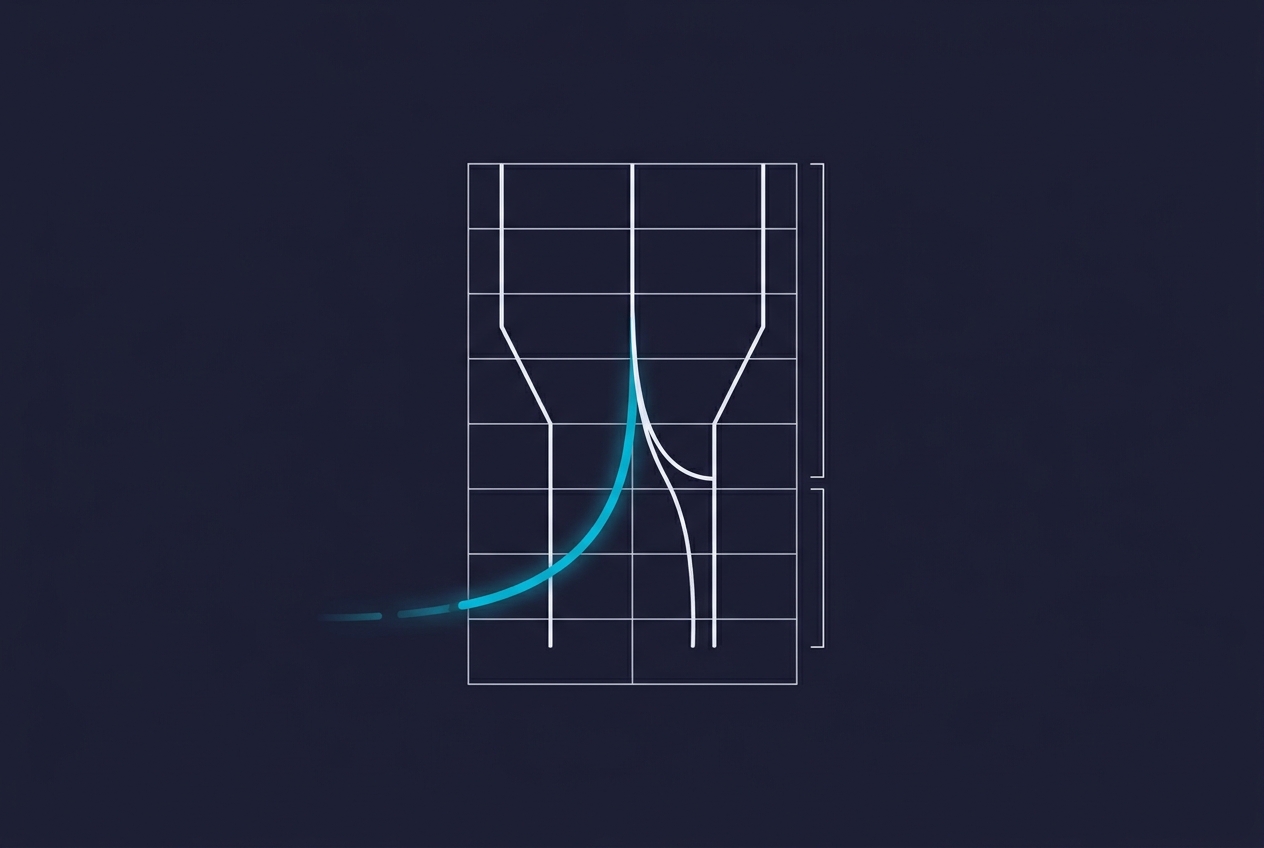
First-contact resolution (FCR) is often considered the primary indicator of both operational efficiency and customer satisfaction. However, in modern multi-channel environments, FCR is frequently a false positive generated by fragmented data across disparate platforms. When a customer fails to resolve an issue via chat on Zendesk and subsequently calls the contact center via a platform like Five9, the system often records two separate interactions—one 'resolved' and one 'new'—artificially inflating the FCR rate.
Key takeaways:
- Siloed data creates 'ghost' resolutions: FCR is often calculated within a single channel, ignoring the customer’s migration from self-service or chat to voice.
- Measurement windows are too narrow: A standard 24-hour window fails to capture complex issues that resurface 48–72 hours later.
- Structural inflation masks churn: Artificially high FCR rates prevent leadership from seeing the correlation between repeat contacts and customer attrition.
- Conversation intelligence is the audit layer: Utilizing tools to analyze 100% of interactions is necessary to verify actual resolution rather than simple ticket closure.
Why does FCR often provide a false sense of success?
FCR provides a false sense of success because most contact centers measure it based on the lack of a follow-up within a specific, often arbitrary, timeframe. If a customer contacts support and does not call back within 24 hours, the interaction is marked as resolved. This methodology fails to account for customers who give up out of frustration or those whose issues require a multi-day cycle to manifest again.
Research from Gartner's Customer Service & Support practice suggests that the complexity of service interactions is increasing, yet measurement windows have largely remained static. When the metric is tied to agent performance bonuses, there is a structural incentive to close tickets quickly, even if the underlying problem remains. This reliance on small pools of data is a recurring theme in operational errors, as explored in The mathematical failure of manual QA sampling in CX.
How do cross-channel migrations inflate FCR?
The most common trap in FCR measurement is the inability to track a single customer identity across different technology stacks. A customer may start a journey in a mobile app powered by AWS, move to a web-based chatbot, and finally dial into a CCaaS platform like Genesys.
If these systems do not share a unified customer data platform (CDP) or a common identifier, each touchpoint is treated as a discrete event. The chatbot session ends and is marked 'resolved' because the customer exited the window. When the customer calls the voice line ten minutes later, the voice platform sees a 'new' customer. In the final report, the organization sees a 50% FCR across two interactions, whereas the reality was a 0% FCR for a single failed journey. This lack of visibility is a primary reason why your CX metrics are missing the churn signal.
The 'Resolution vs. Closure' semantic gap
There is a critical distinction between a closed ticket and a resolved issue. In many CRM environments, such as Salesforce Service Cloud or Microsoft Dynamics 365, 'Resolution' is a status selected by the agent. Without an automated audit, this status is subjective.
Agents may mark a case as resolved to meet Average Handle Time (AHT) or FCR targets, even if they have only provided a temporary workaround or referred the customer to a different department. According to Metrigy’s research on CX success metrics, top-performing organizations are moving away from agent-reported resolution toward verified resolution. Verified resolution uses post-call surveys or AI-driven conversation analysis to confirm the customer's sentiment and factual outcome.
Can AI-driven conversation intelligence fix FCR reporting?
To move beyond the limitations of manual reporting, organizations are integrating conversation-intelligence layers to audit 100% of interactions. While a CCaaS provider like Talkdesk or RingCentral handles the routing, a layer such as Hear.ai can analyze the actual transcript of the call to detect phrases like 'I'm calling back about...' or 'This is the third time I've reached out.'
This technology allows QA teams to move from sampling to total coverage. By identifying keywords and sentiment patterns across all voice and text channels, leadership can see the true rate of repeat contacts regardless of whether the agent marked the ticket as closed. This approach aligns with Forrester’s CX Index methodology, which emphasizes that the customer's perception of the experience—not the internal system status—is the ultimate arbiter of success.
The danger of the 24-hour measurement window
Most FCR formulas use a 24-hour 'no-call-back' window. This is fundamentally flawed for industries with long-cycle resolutions, such as insurance claims, technical hardware support, or financial services. If a customer calls on Friday and the issue resurfaces on Monday, the Friday call is recorded as a 'first contact success.'
Analysts should instead use a rolling 7-day or 14-day window for FCR, tailored to the specific product lifecycle. While this will lower the reported FCR percentage, it provides a more accurate reflection of the customer effort. Reducing customer effort is a more reliable predictor of loyalty than NPS, a shift discussed by firms like IDC in their Future of Customer Experience research.
FAQ
What is the difference between FCR and Repeat Contact Rate? FCR measures the percentage of issues resolved on the first try, while Repeat Contact Rate (RCR) measures the frequency with which customers must reach out again for the same issue. RCR is often a more accurate metric because it is harder to 'game' by closing tickets; it looks at the customer's behavior (calling back) rather than the agent's action (closing the case).
How do you calculate FCR in an omnichannel environment? Accurate omnichannel FCR requires a unified customer ID across all platforms (chat, email, voice, and social). The calculation should count any contact from that ID within a 7-day window as a repeat contact, regardless of which channel they used for the initial or follow-up interaction.
Why is my FCR high but my CSAT low? This is a classic sign of FCR inflation. It usually means agents are closing tickets to meet speed targets (high FCR), but the customers do not feel their problems were actually solved (low CSAT). This gap indicates that your FCR measurement window is likely too short or that you are not accounting for cross-channel migrations.
Does AI improve FCR? AI improves FCR by providing agents with real-time knowledge base suggestions and by automating simple resolutions via self-service. However, it also makes FCR harder to measure because the 'easy' issues are handled by bots, leaving only the most complex, multi-touch problems for human agents, which naturally lowers the human FCR rate.
For more on how to align your performance data with actual customer outcomes, explore our analysis of why your CX metrics are missing the churn signal.